
What causes the high cost of CNC machining?
- What causes the high cost of CNC machining?
- Analyzing the cost issues from the perspective of CNC machining technology itself
- Market and cost structure perspective analysis
- Caused by manufacturing conditions
- Factors contributing to high CNC machining costs due to part design
- Briefly describe how to reduce CNC machining costs
- CNC machining cost factors and basic calculation formulas
- Choose Elimold as your partner for CNC machining projects
- Summarize
- FAQ
As a custom CNC parts manufacturing engineer at Elimold , I’m often asked why CNC machining costs are so high. In reality, cost isn’t determined by a single factor, but rather by the combined effects of technology, operations, and the market. Costs vary depending on the machining project. Moreover, cost is a crucial factor to consider in most of the projects I’ve worked on . Therefore, we recommend understanding the various factors involved in CNC machining and their impact on cost.
This article will help you understand the main factors affecting CNC machining costs, enabling you to minimize costs for your projects.
Analyzing the cost issues from the perspective of CNC machining technology itself
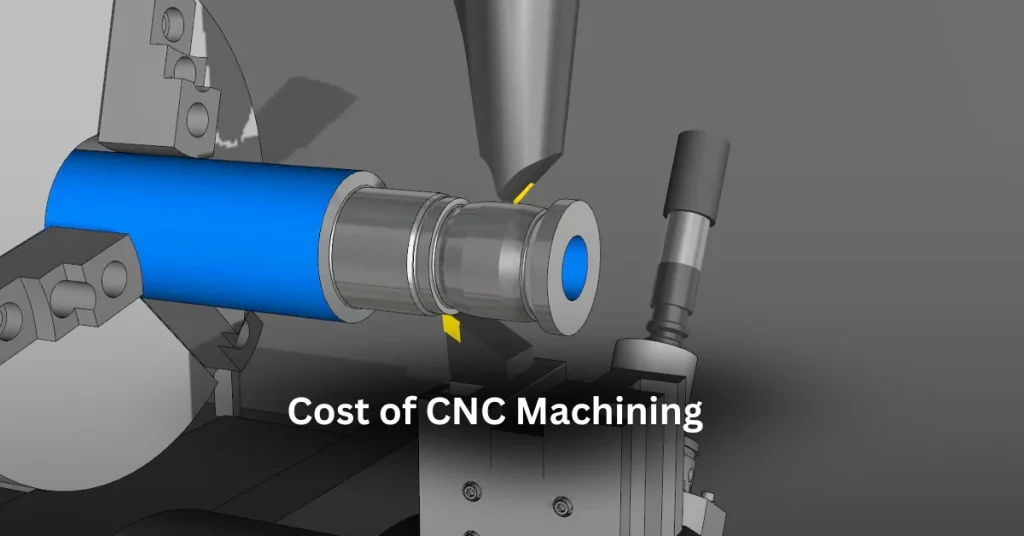
The cost of CNC machining solely from the perspective of the technical processes themselves , its high cost stems from the nature of subtractive manufacturing and the precision standards that must be met. CNC machining requires the removal of material layer by layer, which means longer toolpaths, multiple tool changes, and reduced feed rates to achieve high-precision features. Complex geometries increase cutting time, while tight tolerances require meticulous parameter control and repeated verification. If your project also involves multi-axis machine tools, the cost may be even lower, as multi-axis machining increases project costs due to the need for specialized equipment and highly skilled programming . In my daily work, I often find that even simple design changes , such as reducing tolerances or simplifying cavities , can significantly shorten part production time. Therefore, to understand the specific cost of a CNC-machined part project, it’s sufficient to understand how many machining processes are required to complete the project. Because machining processes fundamentally link cost to time, precision, and complexity, and a reduction in any of these factors will affect quality.
Market and cost structure perspective analysis
From a market perspective, the CNC machining industry has high fixed costs . We can analyze this simply by looking at cost factors such as labor, rent, machinery, and materials. These are the basic elements that make up a professional custom CNC parts manufacturer, and they also vary depending on the region. Below are some key points I analyzed to explain to my clients regarding the market-driven increases in CNC machining costs .
One of the most pressing issues in the market is the limited supply of skilled CNC machine operators, programmers, and debugging technicians. As demand for custom parts grows, competition for talent intensifies, driving up wages. This cost is directly passed on to machining service prices. This phenomenon is particularly pronounced in industrially concentrated areas, indirectly leading to the need to seek high-precision parts in densely populated industrial regions, where the operating costs are already prohibitively high.
In addition, the cost of purchasing machinery and equipment is also one of the fixed costs for professional manufacturers. Even before any parts are produced in a CNC machining workshop, the financial burden of equipment investment is quite heavy. Modern three-axis, four-axis, and five-axis machining centers require significant initial capital investment, and due to pressures in the global supply chain, the price of advanced equipment has been steadily rising, leading to increased costs for businesses, which are then passed on to the unit price of products.
Raw material prices are another external factor affecting the final machining cost of CNC parts. Metals, in particular, are influenced by global commodity market trends, and sudden price fluctuations directly impact the accuracy and stability of quotations. Typically, material costs account for 30% to 60% of the total cost in project quotations, depending on the material grade and inventory levels. Any increase in raw material costs will immediately raise the final price for the client.
The final scenario involves the increasing demand for personalization in the global consumer market, leading to fragmented orders and a growing market preference for customization. Customers require unique parts with varying specifications and small production volumes. This trend hinders economies of scale and increases setup, programming, and material procurement costs.
Caused by manufacturing conditions
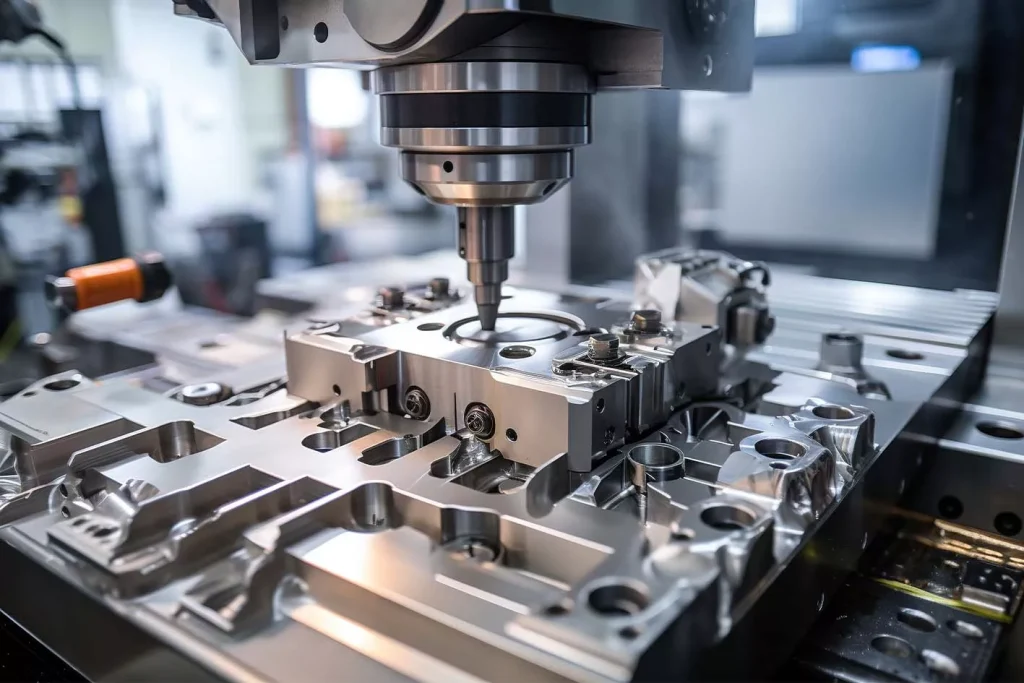
Cost analysis of CNC machining projects can also be approached from the perspective of the CNC machining process itself, where costs increase with the accumulation of time and labor at each stage. Programming requires CAM strategies and simulation to avoid collisions. Setup requires precise fixture, alignment, and tool selection. Machining time depends on the geometry and tolerance requirements of the part. Quality inspection typically takes almost as long as the machining time.
Therefore, the persistence of these costs becomes even more apparent when we truly examine the CNC machining process . Each custom part requires individual engineering review, CAM programming, simulation, fixture setup, tool calibration, machining operations, finishing, and quality inspection. Unlike mass production, CNC machining rarely benefits from economies of scale unless parts are ordered in bulk. Furthermore, each step requires skilled workers and strict process control.
These basic manufacturing conditions have laid the foundation for the high costs of CNC machining projects. Furthermore, the more complex the project, the more types of processes are required, and the higher the cost becomes.
Factors contributing to high CNC machining costs due to part design
The more complex the structure of a part, the higher its manufacturing cost —a reason that’s common knowledge. Generally, parts with highly complex designs require more advanced machinery to manufacture , and they also require more machining time, multiple assembly and disassembly processes, equipment setup, more resources, and closer inspection. All of these factors affect the cost of the part. Therefore, if certain features of a product do not affect its functionality, the design should be optimized to avoid machining these features, thereby reducing production costs. Based on my years of experience, you should ensure that your part features (e.g., holes, contours, slots, threads, etc.) can be manufactured using common standard tools, rather than designing a large number of custom holes and thread sizes , as these special designs require specialized tools, which are very expensive. To help you understand, I have summarized a table of key design issues.
| The part design requires the tolerances to be as large as possible. | tolerance requirements typically make part manufacturing more difficult and therefore more expensive. Control is only necessary when a part’s dimensions significantly impact the overall functionality of the product . I usually recommend having a common reference point or datum when designing parts. Firstly, you minimize dimensional control on the part; secondly, it reduces inspection time for machinists, which also reduces costs. |
| Avoid designing features with high aspect ratios and low aspect ratios . | In CNC machining, parts with high aspect ratios are prone to vibration, making the machining of high-precision parts difficult. To avoid this, these small features should be connected to thicker walls or supported by reinforcing ribs during the part design phase . |
| more standard-sized holes and avoid designing non-standard-sized holes. | Standard-sized holes can usually be machined quickly and accurately using standard drill bits. Non- standard holes, however, require end mills, which increases costs. Furthermore, the hole depth should not exceed four times the diameter. Deep holes can be machined (up to ten times the diameter), but the cost will increase significantly due to the greater difficulty of machining them. |
| Reduce thread depth during part design | Unnecessarily deep threads in a part design can significantly increase project manufacturing costs because they require specialized tools. Generally speaking, a long thread depth (more than 3 times the hole diameter) does not increase connection strength . |
| Avoid thin-walled design for parts | Thin-walled designs should be avoided when designing parts unless required by the product specifications . This is because such designs lack strength and increase the cost of the part project. Generally, thin walls are prone to deformation or even cracking during machining. To prevent this, manufacturers typically design more complex machining paths, which increases machining time. Furthermore, thin walls are more susceptible to vibration, making high-precision machining a significant challenge , and the high scrap rate in part production also contributes to increased costs . |
| the depth of the groove on the part | the groove on a part , the greater the impact on its machining cost . This is because machining the groove requires the removal of a significant amount of material and increases machining time. Furthermore, the depth of commonly used CNC cutting tools is limited. Optimal machining results are achieved when the groove depth is 2-3 times the tool diameter. |
| The vertical inner angle of the slot in the part should be designed to conform to the standard dimensions of the cutting tool. | All CNC tools are cylindrical. When machining grooves, a fillet with the same size as the tool is formed at the vertical connection of the groove.If the fillet radius at the vertical connection of the slot is too small during product design, a smaller cutting tool will be required. This will increase machining time because smaller cutting tools are less efficient than larger ones, resulting in increased machining time and cost. |
| Avoid designing parts with multiple surface treatments | Surface treatment can improve the appearance and resistance to harsh environments of CNC parts, but it increases costs. If CNC parts require multiple different surface treatments, the cost will increase further due to additional steps, such as masking certain surfaces. |
| The blank size should be considered when designing parts . | The dimensions of the blank affect CNC machining costs. To ensure dimensional accuracy, material must be machined from all sides of the part, which greatly increases material costs, especially in mass production. |
| Minimize the use of text and symbols on the surface of parts . | The more complex the text and symbols designed on the surface of a part , the more additional processing steps and time are required , thus significantly increasing the project’s manufacturing cost. Generally, I would advise clients to use surface treatment techniques such as screen printing or spray painting to add text and symbols to CNC parts at a lower cost. |
| If complexity of the parts is unavoidable, convert the complex parts into modular components . | When a part becomes too complex, it is recommended to break it down into multiple components for assembly. This makes machining much easier and simpler. It significantly reduces setup time, minimizes machining operations, and optimizes machining time. This is a common strategy used by designers to improve the manufacturability of parts and reduce their manufacturing costs. |
Briefly describe how to reduce CNC machining costs
To reduce the cost of CNC machining projects, after understanding the various factors mentioned above, and before starting the project, you need to calculate the required costs . There are different methods to reduce machining costs, generally through the following two main directions:
The quantity of parts ordered per order
Ordering a large quantity of parts at once can save significant costs. The cost per unit will decrease because you only need to design the same part once. In this case, the parts you need already have complete data from the same supplier, and production can be completed simply by repeating the machine settings . This drastically reduces production costs. If you only need small-batch production or only need a single rapid prototyping part, the project cost will usually be much higher than the cost of mass production . This is a typical scale effect phenomenon in CNC machining. When manufacturers can spread fixed costs across each product , the overall project cost will decrease significantly . When producing only one unit, that one unit bears all the upfront costs; when producing 1000 units, these costs are spread 1000 times, and the cost per unit naturally decreases dramatically.
Wise material selection
To reduce product costs, special attention must be paid to material selection. Materials with good mechanical properties will have lower processing costs. Keeping the product’s function in mind, you must choose the best available material that is easy to process. There is a price difference between plastic and metal materials. Of course, you can ask your manufacturer for more advice on material selection based on your project requirements. However, I’ve encountered many clients who manufacture single parts to test a particular material. Because of the special material, the cost per part is high, which directly leads to a similarly high project cost.
CNC machining cost factors and basic calculation formulas
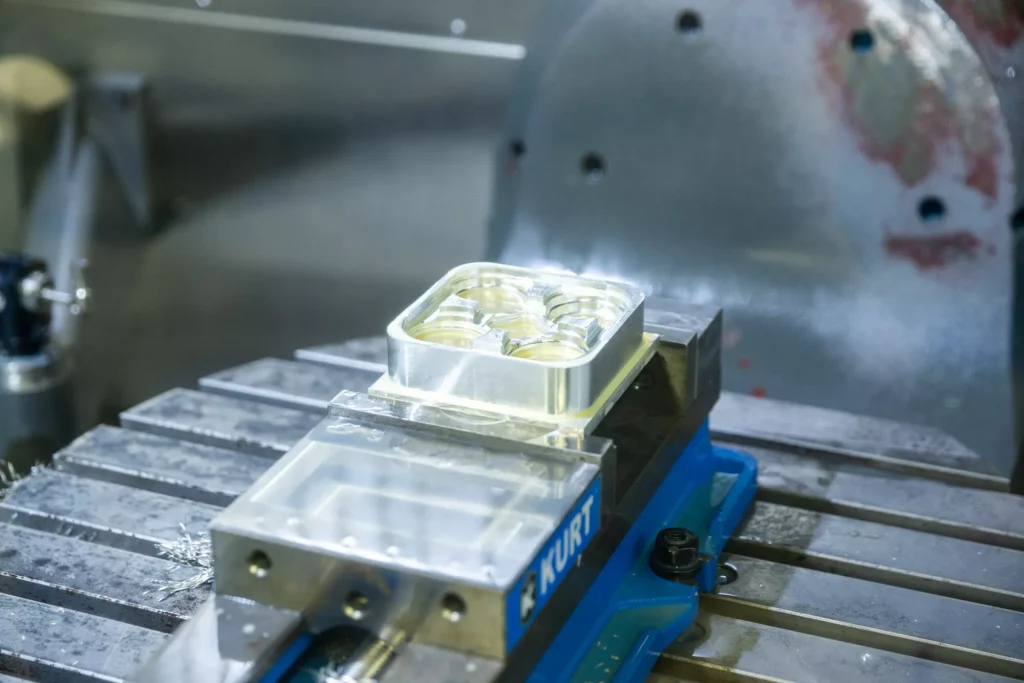
Understanding CNC machining costs hinges on recognizing its three fundamental components: machinery, materials, and labor, and its control by three variables: design complexity, order volume, and process quality. We hope this table will help you easily construct a cost estimation framework.
Quick Reference to Key Elements of CNC Machining Costs
| Cost categories | Specific components/influencing factors |
| Machine cost | The hourly uptime of the CNC machine (depreciation, maintenance, electricity consumption, etc.). |
| Material costs | The cost of purchasing raw materials used to manufacture parts. |
| Labor costs | Labor costs for programmers and operators. |
| Part complexity | The more complex the design, the longer the programming and manufacturing time, and the higher the cost. |
| Order batch size | Batch size affects the initial setup cost per unit. |
| Accuracy requirements | The larger the tolerance, the higher the processing cost. |
| Post-processing function | For example, sandblasting and anodizing can incur additional costs for surface coatings. |
Basic cost calculation formula for CNC machining projects
The following are formulas I commonly use when estimating processing costs for clients. These formulas help quantify how labor, equipment, time, and materials work together.
| Total cost | Machine tool time × hourly rate + material cost + tooling cost + setup cost |
| Machine tool time | Cutting path length ÷ feed rate + tool change time + idle time |
| Hourly rate | (Machine tool depreciation + labor costs + management expenses) ÷ annual operating hours |
| Labor and programming costs | Programmer working hours are the same as operator and engineer debugging and monitoring working hours. |
| Material costs | Part volume x material density x material unit price and scrap rate. |
| Indirect costs | Factory rent and management fees are typically charged as a percentage of each order. |
Cost difference between 3-axis and 5-axis machining
Understanding the cost differences between 3-axis and 5-axis machining is crucial when designing CNC machining projects, as it impacts your equipment investment and the total cost of CNC machining. These two technologies differ significantly in price, applicable scenarios, and overall advantages. The table below provides a comprehensive comparison of their key differences:
| Comparison Dimensions | 3-axis machining | 5-axis machining |
| Equipment investment | The purchase cost is relatively low, ranging from approximately 150,000 to 500,000 RMB. | The initial investment is relatively high, generally ranging from 800,000 to 2 million RMB. |
| Processing efficiency | It is efficient for machining simple planar or geometrically shaped workpieces, but for complex workpieces, it requires multiple clamping operations, which is very time-consuming. | Machining multiple surfaces simultaneously in a single fixture can significantly improve machining efficiency, in some cases by nearly 40%. |
| application | Suitable for planar milling, roughing, and semi-finishing of simple contours and workpieces. | Suitable for complex curved surfaces (such as impellers and aircraft parts), precision molds, and workpieces with high precision requirements. |
| Overall cost-effectiveness | For simple workpieces, the cost per workpiece is improved. | For complex parts, fewer setups, labor savings, and shorter cycle times can provide greater cost advantages in the long run. |
Choose Elimold as your partner for CNC machining projects
Dear readers , I am a senior engineer at Elimold . As a world-leading provider of on-demand manufacturing, we are committed to seamlessly connecting people with great ideas with the manufacturing capabilities to turn those ideas into reality, providing a continuous driving force for industries now and in the future. Elimold ‘s services help Fortune 1000 brands, manufacturers, and product designers provide advanced custom manufacturing capabilities .
like Elimold can provide high-quality CNC machining services at prices far lower than their counterparts in developed economies. This makes outsourcing a viable option for reducing overall machining costs, especially for companies looking to optimize their budgets without sacrificing quality.
with Elimold makes calculating your CNC machining costs simple and fast. Our rapid quoting capabilities ensure you receive a quote almost instantly. We’ll review your design and provide feedback within a day. Furthermore, we boast one of the industry’s fastest lead times, guaranteeing on-time delivery. What are you waiting for? Start your CNC machining project today and get a CNC machining quote .
Summarize
CNC machining is essentially a precision-oriented, customization-centric manufacturing technology. Its cost reflects the cumulative impact of equipment investment, skilled labor, complex workflows, and material consumption. In evaluating projects, I’ve found that costs are not inflated, but rather directly related to the technological depth required to achieve precision, repeatability, and reliability. While CNC machining is more expensive than mass production methods, it remains unparalleled when customers require high-precision, high-strength, or highly customized parts. By understanding the factors behind the cost, engineers and customers can collaborate to optimize designs, reduce unnecessary complexity, and achieve the best balance between performance and budget.
FAQ
What is the typical hourly cost range for CNC machining?
The hourly cost of CNC machining typically ranges from $50 to $200, depending on the machine type (e.g., a low-end 3-axis or a high-end 5-axis machine), part complexity, the difficulty of the material being machined, and local operating costs.
How can I reduce the total cost of CNC machining?
Significant cost savings can be achieved by optimizing part design (e.g., eliminating cumbersome features), selecting the best materials, and planning production batches in advance. Elimold’s experienced engineering team offers free design consultations, allowing you to understand cost-saving opportunities early on while achieving the best balance between efficiency and cost.
Which is cheaper, 3-axis or 5-axis CNC machining?
Three-axis machining is suitable for simple parts and has lower equipment costs. Five-axis technology significantly reduces overall costs when machining complex parts by reducing setup time and supporting the creation of complex surfaces in a single setup. The Elimold team will recommend the most cost-effective option based on your part size and productivity requirements. We will develop the solution best suited for your product.
Does surface treatment increase the cost of CNC parts?
To improve component performance, specific surface treatments are necessary. These treatments include chemical plating, sandblasting, electropolishing, and anodizing. However, these surface treatment methods should only be used when necessary. Applying different surface treatments to multiple surfaces of a component increases the overall cost of the project. For example, some project managers might use chrome plating in some areas and sandblasting in others; such a design increases the cost of manufacturing the part.
Comparison of Unit Costs for CNC and 3D Printing
As production volume increases, CNC machining becomes more cost-effective. Higher production volumes reduce costs. 3D printing is independent of quantity or volume units, only related to the weight of the part. As long as the total weight of your part remains constant, its price remains constant for any volume.