


Demand Analysis and Design
We communicate with our clients to understand their application needs in detail and design the size, shape, and liquid channel layout of the cold plate based on their cooling requirements. Especially for cold plate liquid cooling systems, we perform precise design based on the liquid flow pattern and cooling requirements.

Material Selection
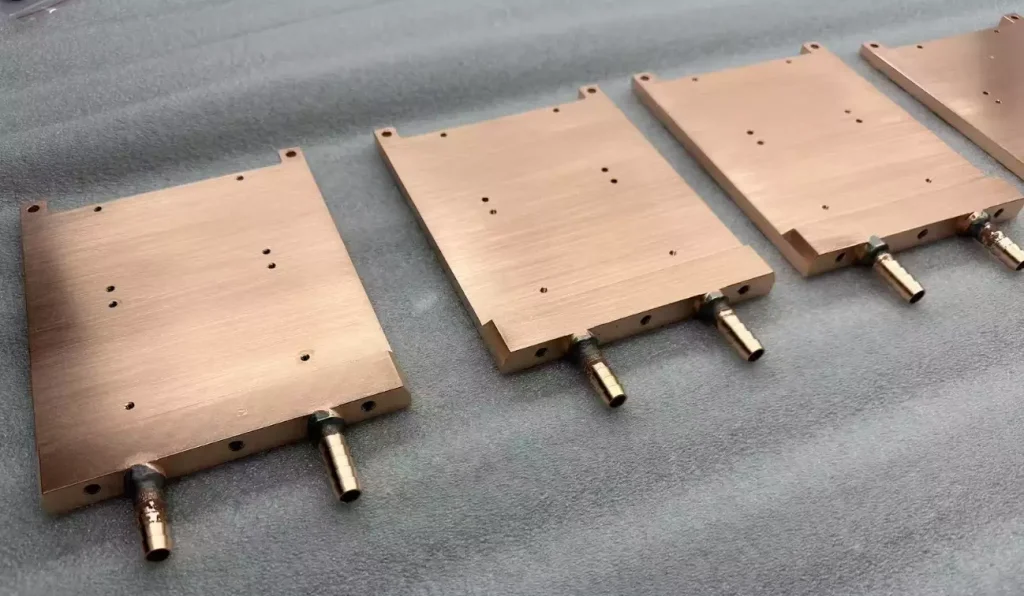
We offer cold plates in various materials, including copper, aluminum, and other alloys, according to client needs. Copper cold plates have excellent thermal conductivity and are typically used in systems requiring efficient heat dissipation; while aluminum cold plates are lighter and suitable for low-power applications.

Processing and Manufacturing
Utilizing various advanced manufacturing technologies, each cold plate is precisely manufactured according to the design drawings, ensuring that the size and shape of each cold plate meet design requirements. The internal heat dissipation channels of the liquid-cooled cold plate are also precisely arranged according to heat dissipation requirements.

Surface Treatment
Depending on specific application requirements, we offer various surface treatment methods, such as anodizing, spraying, and nickel plating, to improve the corrosion resistance, oxidation resistance, and aesthetics of the cold plates. Especially in cold plate liquid cooling systems, surface treatment helps extend service life and improve cooling efficiency.

Precision Requirements
Precision is one of the core advantages of our cold-rolled steel products. Elimold strictly controls dimensional errors and machining accuracy during the production process. For copper cold-rolled steel plates requiring efficient heat dissipation, our machining accuracy can reach the micron level to ensure optimal heat dissipation.


Copper Tube Cold Plate
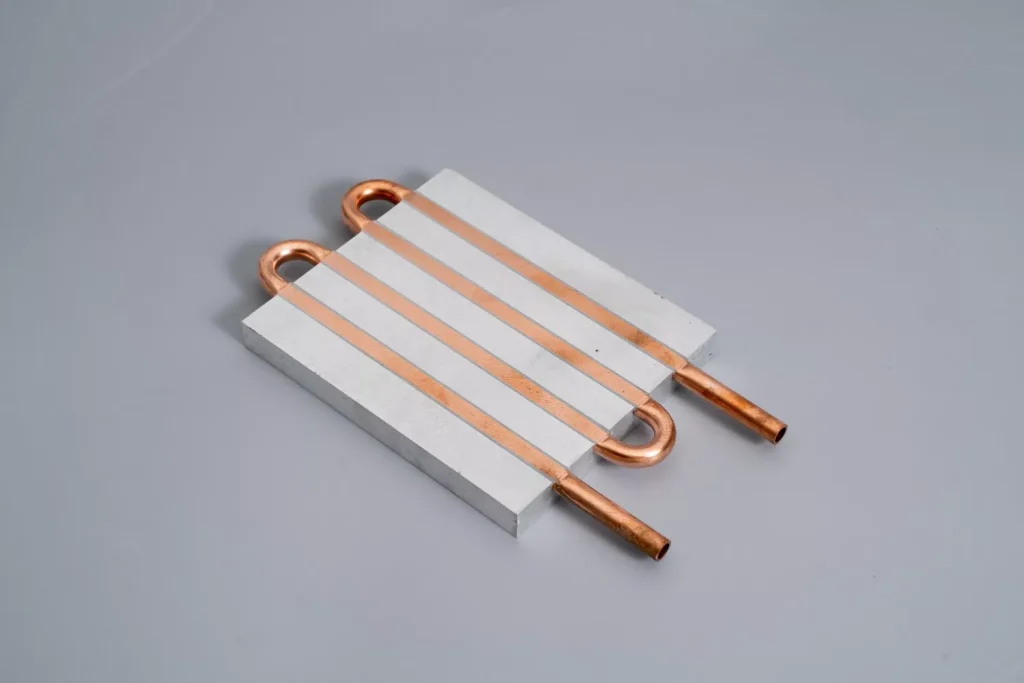
The tubing uses pure copper, characterized by corrosion-resistant flow channels and no copper ion precipitation. Ideal for lasers, medical equipment, and precision semiconductor control.

Stainless Steel Cold Plate
The main structure consists of high thermal conductivity stainless steel tubing embedded in an aluminum base. Advantages include mature technology and high cost-effectiveness. Core applications are high-power electronic devices, IGBTs, and inverters.

Vacuum Brazed Cold Plate
Manufactured using advanced vacuum brazing technology. Customizable internal flow channels, compact and lightweight structure. Robust, durable, fully sealed, and with excellent heat transfer performance.

Stamped Brazed Cold Plate
Ultra-thin and lightweight, with precision stamped channels. Enables large-area uniform heat dissipation. Suitable for electric vehicle battery packs, energy storage devices, and small electronic products.

Friction Stir Welded Cold Plate
Seamless FSW joints (slag-free/deformation-free). Supports extra-large sizes and high structural strength. Main applications are commercial vehicle battery trays, energy storage system containers, and rail transportation.

Serpentine Battery Cold Plates
Cylindrical battery thermal management. It can fit tightly against the battery side. Its main advantages are large contact area, rapid heat exchange, and prevention of thermal runaway.

Vapor Chamber Cold Plate
Embedded heat pipe/vapor chamber base. It can eliminate localized hot spots and rapidly diffuse heat across the entire surface. It possesses excellent thermal uniformity and cooling efficiency.

Cold Plate with Embedded Heat Pipes
Phase change heat transfer within a vacuum chamber. Ultra-fast thermal conduction and extremely high heat density. Typically used in key applications such as server chips (CPU/GPU) and artificial intelligence computing modules.


CNC Machining
Computer Numerical Control machining. This involves using high-precision cutting tools to carve the heat sink from a solid billet. It is typically reserved for high-precision prototypes or extremely complex geometries where tooling for other methods is not feasible.

Brazing
The substrate and the cover plate are stacked with a filler metal in between an alloy sheet or coating with a lower melting point than the base materials. The assembly is then heated in a vacuum or protective atmosphere furnace until the filler melts, filling the gaps via capillary action to create a metallurgical bond. This process allows for the creation of highly complex internal channels, offers good thermal performance, and is ideally suited for large-scale production.

Friction Stir Welding (FSW)
A high-speed rotating stir pin is inserted into the joint between the plates to be welded, generating frictional heat that softens the material. Through the mechanical action of the stir pin, a solid-state bond is achieved. This process produces high-strength welds with minimal defects and deformation, avoiding common fusion welding issues such as porosity or cracking. No filler material is required.

Metal 3D Printing
Metal powders are used to print integrated cold plates with complex internal channels layer by layer using techniques such as Selective Laser Melting (SLM). This approach offers unparalleled design freedom, enabling the creation of biomimetic or irregular flow channels that are impossible to manufacture with traditional methods, thereby pushing the boundaries of thermal performance.


Anodizing
Building a strong layer that helps aluminum parts resist wear and tear. It enhances the material’s surface and is available in different color options.

Conductive Anodizing
Creating a protective conversion layer that preserves electrical conductivity while providing basic corrosion resistance. It ensures reliable grounding for electronic components.

Nickel Plating
Depositing a uniform metallic layer to provide superior solderability and exceptional chemical resistance. It delivers a premium, bright aesthetic finish and creates a robust barrier against oxidation.

EV Battery Pack Cooling
Electric cold plates for prismatic, pouch, and cylindrical cell packs — maintaining cell-to-cell temperature uniformity during fast charging. We evaluate separate plate configurations for bottom cooling and side cooling zones.

ESS Module Cooling
Designed for long duty cycles with sustained thermal loads — focusing on long-term reliability, corrosion resistance, and consistent performance across seasonal temperature swings.

IGBT / SiC Cooling
Optimized channel density near heat source for high heat flux from power semiconductors. Addressing localized hot spots at die locations.
Server & GPU Cooling
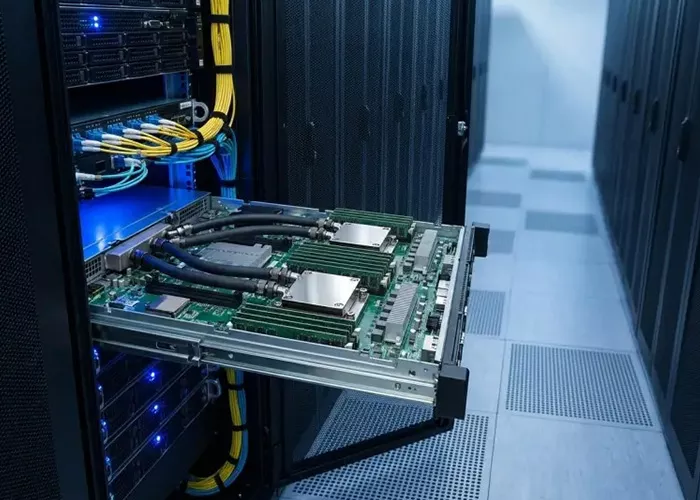
Direct-to-chip cold plate cooler with precise dimensional control and low-profile designs. Copper and aluminum options with nickel-plated surfaces for server rack and GPU cooling.

Industrial Machinery
In equipment like CNC machines, welding systems, and power inverters, cold plates efficiently transfer heat away from sensitive components to maintain reliability and operational efficiency.
Medical
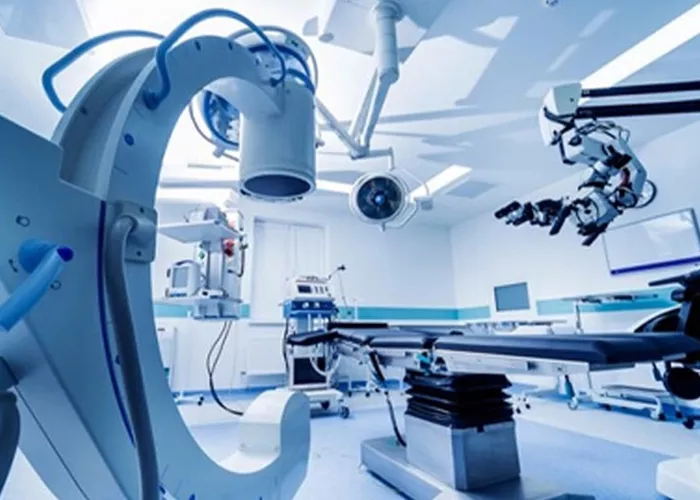
High reliability medical equipment cooling solutions. Boyd’s thermal management solutions for medical products include CT scanner liquid cooling, MRI cooling, UV light and laser cooling solutions, x-ray thermal management, medical chillers, and ultrasound thermal systems.